Crochet vs Knitting: Which Uses More Yarn?
Crochet wins — and not in a good way. For the same finished size, crochet typically consumes 25–30% more yarn than knitting. Here's why, and how to adjust your yardage math for whichever craft you do.
Why crochet eats more yarn
It comes down to stitch architecture. A knit stitch is a single interlocking loop; a crochet stitch is a taller, denser knot that wraps yarn around the hook multiple times. Double crochet, treble crochet, and textured stitches like bobbles and popcorns are the hungriest — a heavily textured crochet throw blanket can use 40% more yarn than its knit equivalent.
The 30% rule of thumb
Planning from a knitting pattern or a generic chart? Multiply the yardage by 1.3 for crochet. A knit scarf at 350 yards becomes ~455 yards in crochet; a knit hat at 200 yards becomes ~260. Our project tables are built from knitting-style estimates, so apply the uplift to the calculator's result — or just set the buffer field to 30% when crocheting from a knit pattern.
Stitch choice matters
Not all crochet is equal. Lacy, open stitches (filet, v-stitch, mesh) use less yarn than the 30% rule suggests; dense stitches (single crochet, waistcoat stitch, cables) use more. Tunisian crochet sits between knitting and crochet. If your pattern is stitch-heavy, treat the 30% as a floor and use the 10% buffer rule on top.
What about knitters?
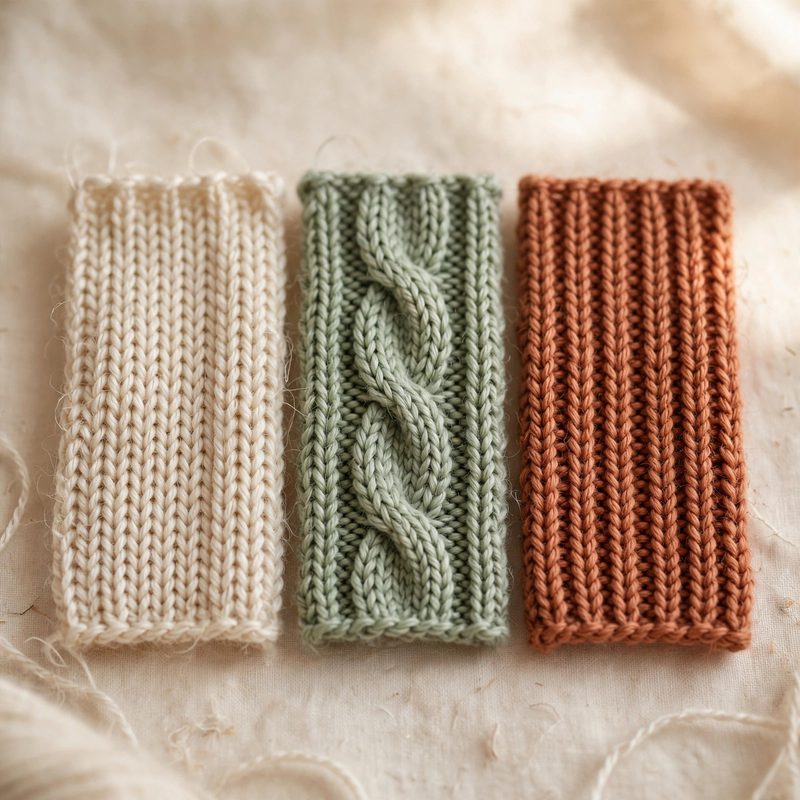
Knitting is the economical craft, but cable and colorwork knitting narrow the gap — stranded colorwork can approach crochet-level consumption. Either way, the habit is the same: calculate for your actual craft, verify against your yarn label's yardage, and buy from one dye lot.
Do knitters ever use more?
Rarely — but it happens. Stranded colorwork carries floats of unused yarn across the back of the fabric, and brioche is famously yarn-hungry: a brioche cowl can use double the yarn of plain stockinette. Cables consume extra too. If your knitting involves any of these techniques, apply the same 30% uplift you would use for crochet.
Which craft is cheaper to start?
Knitting uses less yarn per project, but startup costs differ: knitting needs needle sets in multiple sizes, while crochet needs one hook per project. For a scarf, the yarn gap (350 vs ~455 yards) is about half a skein — a few dollars. Over a blanket, it widens to several skeins. Choose your craft for the fabric you want, not the yarn bill — then calculate honestly for the craft you are doing.
Whatever your craft, the fix is the same: measure honestly for what you are actually making, then buy the buffer.
Turn this into exact yardage
Use the free calculator to convert what you learned into yardage and skein counts.
Frequently asked questions
How much more yarn does crochet use than knitting?
About 25–30% more. A scarf that takes 350 yards to knit needs roughly 450 yards in crochet — always calculate for the craft you're actually doing.
Is the 30% rule exact?
It works as a planning estimate, not a guarantee — lacy crochet uses less, dense single crochet uses more. When in doubt, add the 10% buffer.
How do I convert a knitting pattern's yardage to crochet?
Multiply the knitting yardage by 1.3. Our calculator's project tables assume knitting-style estimates, so apply the uplift to the result.