How to Substitute Yarn in a Pattern (Yardage Math Made Simple)
Found the perfect pattern but not the exact yarn? You don't need the pattern's yarn — you need its yardage. Here's the step-by-step math to substitute any yarn confidently.
Why patterns name a specific yarn
Patterns list a yarn so you can match the designer's gauge and drape — but the critical number is the total yardage, not the brand. If you can compute total yards and match gauge, almost any yarn works. Start by learning to read a yarn label so you can pull the right numbers off the ball band.
Step 1: find the pattern's total yardage
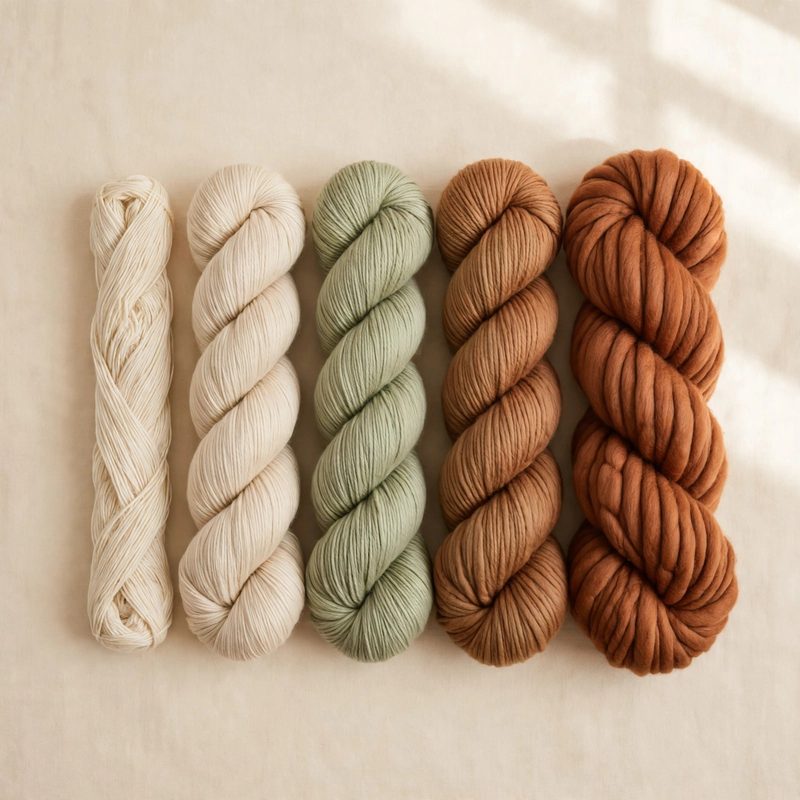
Multiply the number of skeins the pattern calls for by the yardage per skein of the pattern's yarn. Example: a pattern needs 6 skeins of a yarn with 220 yards per skein — that's 1,320 yards total. If the pattern only gives grams, convert using the yarn weight chart: worsted runs about 220 yards per 100 g.
Step 2: convert to your yarn's skeins
Divide the total yards by the yardage per skein of your yarn, then round up and add a buffer. Same example with a 150-yard-per-skein substitute: 1,320 ÷ 150 = 8.8 → 9 skeins, plus one extra for safety (see the 10% buffer rule). The yarn yardage calculator does this division for every project and weight automatically.
Step 3: swatch for gauge
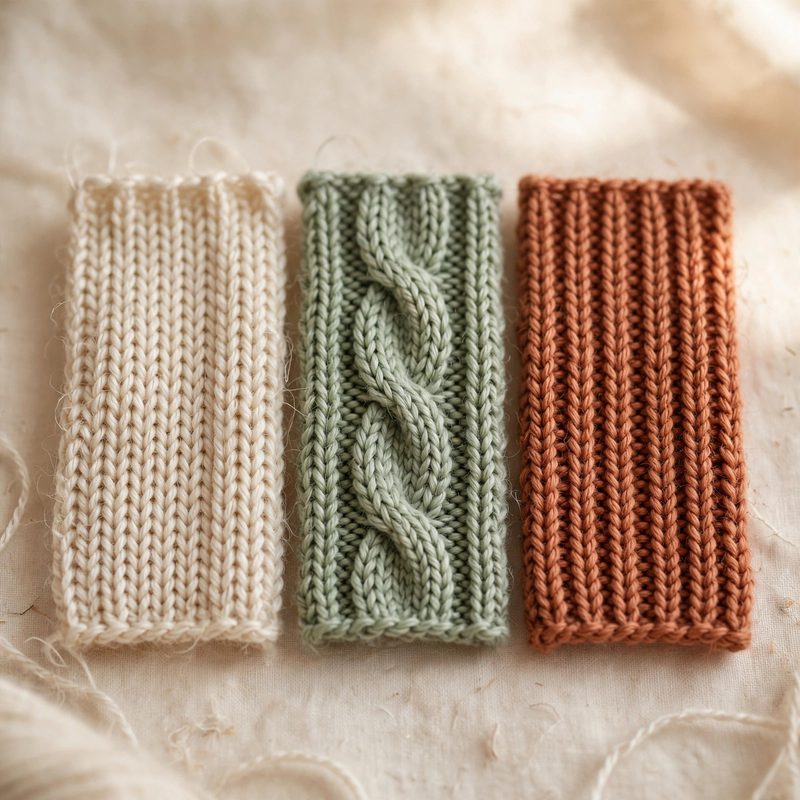
Math gets you the right amount; a swatch gets you the right size. Knit or crochet a 4-inch square in your substitute yarn, wash and block it the way you will treat the finished piece, then measure. If your stitch count doesn't match the pattern, change hook or needle size — and recheck the yardage, because tighter or looser gauge changes how much yarn you consume.
Watch the fiber, not just the numbers
Two yarns can match on weight and still behave differently: cotton stretches less than wool, acrylic drapes differently than alpaca. For structured pieces like a sweater or cardigan, stay in the same fiber family when you can. For blankets and scarves, fiber is more forgiving — drape differences just become design features.
Common substitution mistakes
Matching grams instead of yards. 200 g of lace holds roughly 1,400 yards; 200 g of super bulky holds about 140. Always substitute by yardage. Ignoring fiber behavior. A wool sweater pattern worked in cotton will grow longer and sag — fibers have memory, or they don't. Skipping the swatch. Ten minutes now beats frogging ten hours later. Forgetting the buffer. Substitution adds uncertainty, so bump your buffer to 15% (see the buffer rule). Get these four right and substitutions stop being scary.
Turn this into exact yardage
Use the free calculator to convert what you learned into yardage and skein counts.
Frequently asked questions
Can I substitute a different fiber, not just a different weight?
Yes, if you redo the yardage math and check your gauge with a swatch. Fiber matters too — substituting cotton for wool changes drape and stretch.
What is the formula for yarn substitution?
Multiply the pattern's skeins by the pattern yarn's yardage per skein to get total yards. Then divide by your yarn's yardage per skein and round up.
Do I really need to swatch?
Yes — especially when changing weight or fiber. A 10-minute swatch beats a finished garment that doesn't fit.