How to Read a Yarn Label: Yardage, Weight, Fiber & More
That paper band around your skein is a cheat sheet: it tells you exactly how much yarn you have, what it's made of, and what it can become. Here's how to decode every line.
The numbers that matter most: yardage and weight
Every label lists two key figures: the net weight (often 50 g or 100 g) and the yardage or meterage (e.g., 220 yds / 201 m). Yardage is what patterns and calculators actually use — plug the yardage per skein into the yarn yardage calculator for an exact skein count instead of relying on generic charts.
You'll also see the yarn weight category (0–7) and often a recommended hook or needle size. If the weight number is missing, our yarn weight chart helps you estimate it from the yardage per 100 g.
Fiber content: what your yarn is made of
Labels list fibers by percentage — 100% acrylic, 75% wool / 25% nylon, and so on. Fiber drives everything: warmth, drape, washability, and price. Wool is warm and elastic but often hand-wash; acrylic is cheap, washable, and great for baby blankets; cotton is breathable and sturdy but heavy and inelastic — better for market bags than for stretchy socks.
Dye lot: the number that saves your project
The dye lot is the batch your skein was dyed in. Colors can shift slightly between lots — enough to show as a visible stripe in a large piece. Always buy all the yarn for one project, plus your buffer, from the same dye lot. This is one reason we recommend the 10% buffer rule: running out mid-project and finding the lot is gone is a classic heartbreak.
Gauge and care symbols
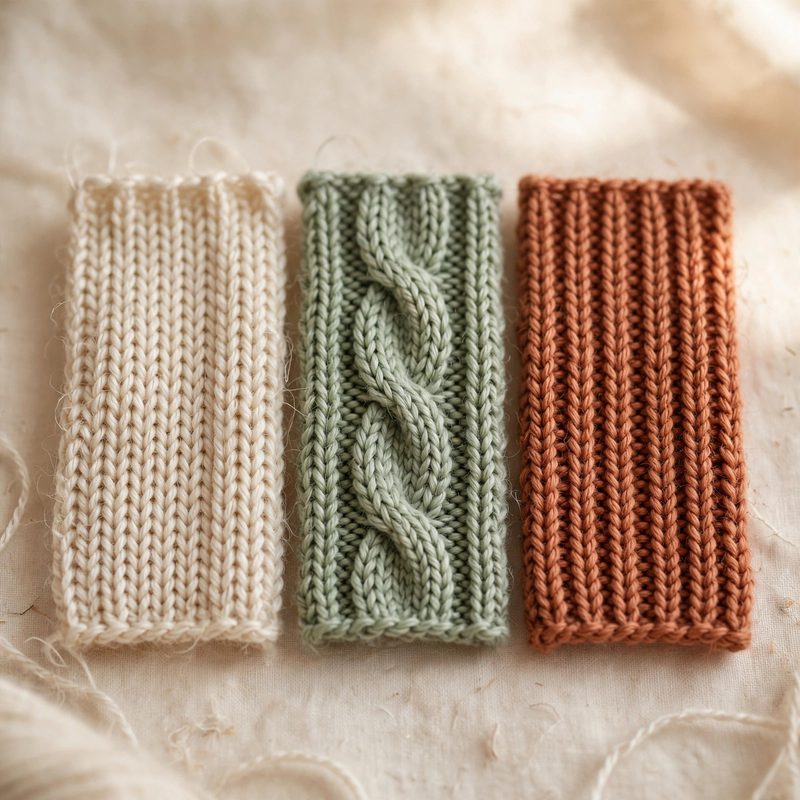
The little knitted square shows gauge: how many stitches and rows make 4 inches (10 cm) with the recommended needles. Your own gauge will differ — swatch before substituting yarn (see how to substitute yarn in a pattern). Care symbols tell you whether the yarn is machine washable; for anything baby-related, washable is non-negotiable.
Putting it all together: a worked example
Say your label reads: 100 g, 220 yds, 100% acrylic, medium (4), dye lot 1234, gauge 18 sts × 24 rows = 4 in on US 8. Translation: you hold 220 yards of washable medium-weight yarn. A baby blanket in this yarn needs about 1,050 yards — that is 5 skeins (1,050 ÷ 220 = 4.8, round up), and the buffer rule makes it 6. Buy all six from dye lot 1234.
The gauge line tells you the designer's tension. If your swatch gives 20 stitches per 4 inches instead of 18, your blanket comes out smaller — size up your needles or add stitches. Keep the labels until the project is finished and washed: if you run short, the dye lot and exact product name are your only hope of matching the color.
Turn this into exact yardage
Use the free calculator to convert what you learned into yardage and skein counts.
Frequently asked questions
What is the most important thing on a yarn label?
The yardage per skein. It is the number that determines how many skeins your project needs — enter it directly into a yarn calculator for the most accurate result.
What does dye lot mean?
The dye lot is the production batch the yarn was dyed in. Buy all skeins for a project from the same lot so the color matches throughout.
Do I need to follow the recommended needle size?
Treat it as a starting point. Your personal gauge matters more — always swatch, especially when substituting yarn.