Temperature Blanket Yarn Planning Guide
A temperature blanket records a year of weather in yarn — one row per day, colored by the day's high. It's a beautiful project and a serious yarn investment. Here's how to plan colors, yardage, and budget before you cast on.
How a temperature blanket works
Pick a year (or start today), assign each temperature range a color, then work one row — or one motif — per day in that day's color. A full year is 365 rows. At a typical gauge, that makes a blanket roughly 70–80 inches long, which is why most makers use throw-blanket dimensions as their planning baseline.
Choosing your palette
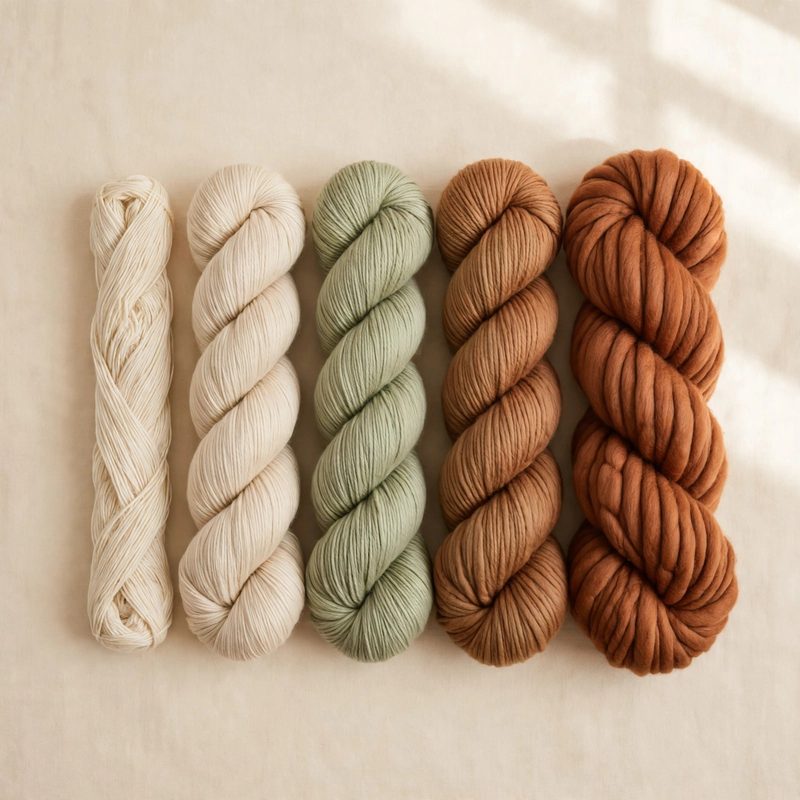
Map your local climate into 8–12 temperature bands of 5–10°F each, one color per band. Check a year of historical highs for your city so no color goes unused — a band that never occurs is a wasted skein. Keep the palette cohesive (a gradient from cool blues to warm reds is classic), and buy all colors from the same yarn line so weight and washability match. Worsted (4) is the most common choice: fast enough for 365 rows, warm enough to matter.
The yardage math
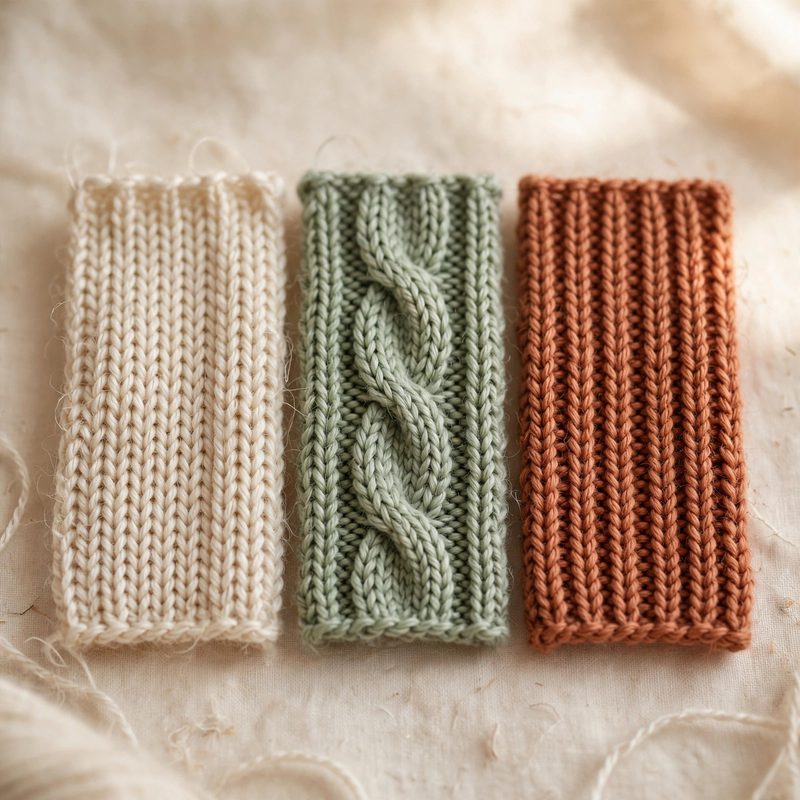
Estimate per-row yardage from a swatch: work 10 rows, measure yarn used, divide by 10. A typical worsted row across a throw-width blanket uses 12–18 yards; 365 rows × 15 yards ≈ 5,500 yards total. Divide by your skein's yardage (say 220) → 25 skeins, then apply the 10% buffer → ~28 skeins. Split across colors by your climate: extreme bands need 1–2 skeins, middle bands need 4–6. Run each color through the yarn yardage calculator as its own mini-project.
Budget and sanity tips
Twenty-eight skeins is real money — watch for sales and buy the full palette upfront (dye lots matter across a year-long project). Simplify: use two-row stripes per week instead of daily rows, or make a baby-blanket-sized version for a single season. And weave in ends as you go. Future you will be grateful.
Picking your year and data source
Use a past year so you can work continuously — weather sites publish daily highs by city and date, and a year of history is easy to pull. A birth year, wedding year, or first year in a new home turns the blanket into a keepsake. Record daily highs (not averages) for the most dramatic color range, and decide your rule for missing data now: repeat the previous day's color rather than guessing.
Track spending per color as you go — temperature blankets are notorious budget creepers, because buying “just one more skein” twelve times adds up fast.
Turn this into exact yardage
Use the free calculator to convert what you learned into yardage and skein counts.
Frequently asked questions
How much yarn does a temperature blanket take?
Roughly 5,000–7,000 yards of worsted-weight yarn for a 12×12-inch-square-per-day blanket — about 25–32 skeins at 220 yards each.
How many colors do I need?
Assign one color per 5–10°F band. Fewer bands mean fewer colors to buy; most makers use 8–12 colors.
How do you actually make one?
Join-as-you-go squares or a striped blanket in rows, working one row (or square) per day's temperature with the matching color.