How Many Skeins Do You Need? The 10% Buffer Rule
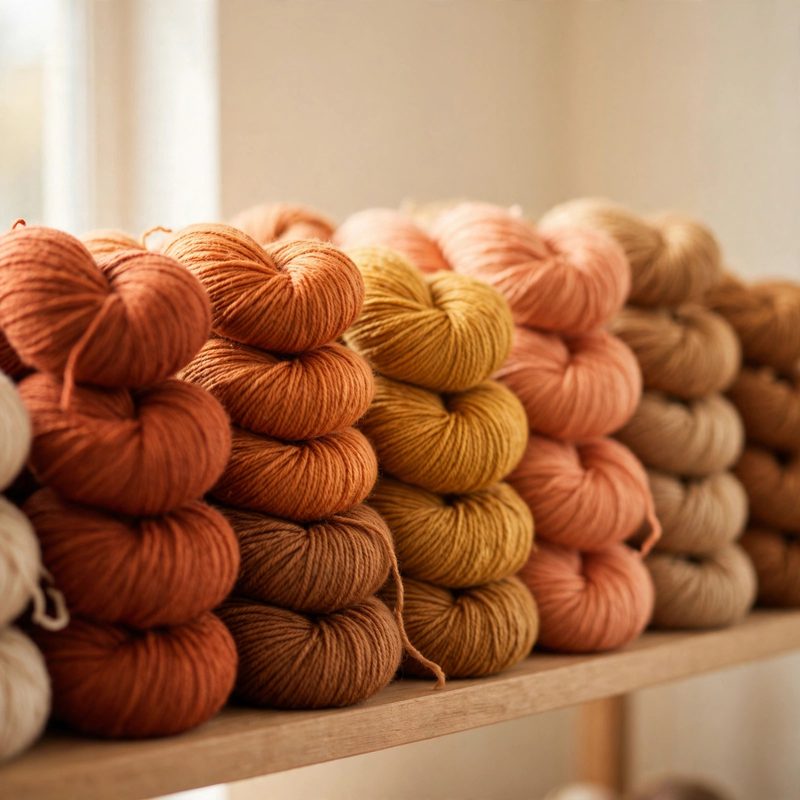
Every yarn estimate assumes average gauge, an average size, and average luck. Real projects are none of those. The 10% buffer rule is the simple habit that keeps you from running out of yarn one skein short of finished.
Why estimates always fall short
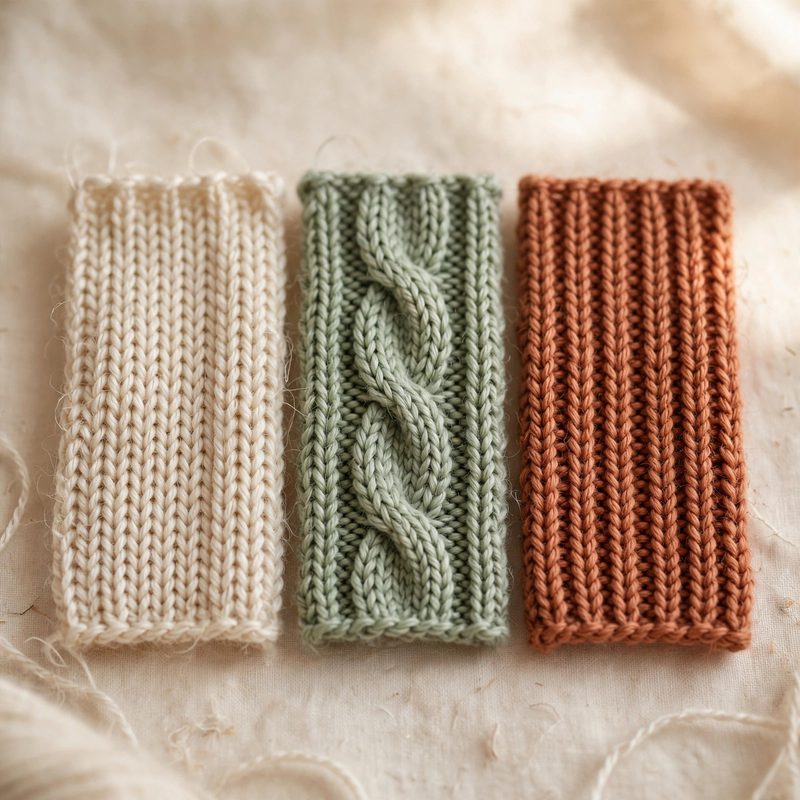
Yardage charts — including ours — are computed for average gauge and standard sizes. Your tension, stitch pattern, and finished dimensions all shift the real number. Cable work eats more yarn than stockinette; a tall wearer needs a longer sweater; crochet consumes roughly 25–30% more than knitting (see crochet vs knitting yarn usage). The estimate is the starting line, not the finish.
The math, step by step
The rule in one sentence: buy 10% more yarn than the chart says, rounded up to whole skeins. Here is how it plays out in practice.
Example 1 — hat: the chart says 200 yards in worsted. 200 × 1.10 = 220. Your skeins hold 220 yards each → exactly 1 skein; buy 2 anyway, same dye lot. Example 2 — throw blanket: 2,200 yards worsted. 2,200 × 1.10 = 2,420 ÷ 220 = 11 skeins exactly → buy 12. Example 3 — substituting yarn: the pattern needs 1,320 yards; your yarn has 150 yards per skein. 1,320 × 1.15 (substitution = 15%) = 1,518 ÷ 150 = 10.1 → 11 skeins.
The calculator's buffer field runs this math live — set it to 10 for routine projects and 15 when substituting yarn or working from a guess.
The rule
Take the calculated yardage, add 10%, divide by your skein's yardage, and round up. Example: a scarf needs 350 yards in worsted. Add 10% → 385 yards. Your skeins hold 220 yards each → 1.75 → buy 2 skeins. The yarn yardage calculator has a buffer field built in — it defaults to 10% and does this arithmetic for you.
When 10% isn't enough
Use 15–20% when any of these apply: it's your first project in this stitch pattern, you're substituting yarn (recheck with our substitution guide), the project is large (a queen blanket at 15% is 690 extra yards — that's three skeins of insurance on a month-long project), or the colorway could be discontinued. Dye lots are the real reason buffers exist: yarn bought months later may not match.
What to do with leftovers
Buffers leave you with partial skeins — that's a feature. Leftover worsted becomes hats and mittens; fingering scraps become striped socks; everything else becomes amigurumi. A planned surplus is always cheaper than a stalled project.
Turn this into exact yardage
Use the free calculator to convert what you learned into yardage and skein counts.
Frequently asked questions
What is the 10% buffer rule in one sentence?
Add 10% to the calculated yardage, round up to whole skeins, then buy one extra skein for large projects or when the dye lot might sell out.
Should big projects get a bigger buffer?
Yes — the bigger the project, the bigger the absolute error. Blankets and sweaters deserve 15%; a hat is fine at 10%.
What if I run out and the dye lot is gone?
Buy the same dye lot. If the lot is gone, use the new skeins for a separate section (like a border) where a slight shift looks intentional.